
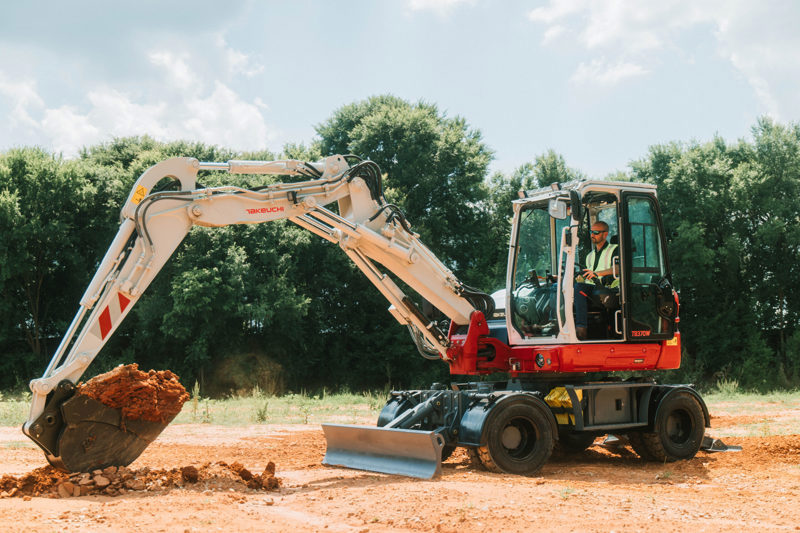
Match the bucket to the material
The biggest variable in digging productivity is often not the excavator itself but the bucket on the end of it. Running the wrong size or style of bucket for the ground conditions adds cycle time, increases wear, and forces the machine to work outside its efficient hydraulic range.
In cohesive clay or compacted soil, a narrower bucket with heavy-duty teeth gives better penetration and cleaner fill. In sandy or gravelly material, a wider bucket fills faster and empties cleanly. An oversized bucket in resistant ground forces the machine to work harder through each stroke, increasing heat build-up in the hydraulic circuit and slowing swing times.
For sites with variable ground conditions, having two or three bucket options on hand is worth the logistics. The time cost of a bucket swap is recovered quickly once the machine is working in its efficient range.
Tighten the dig cycle
Cycle time, the total elapsed time from crowd to swing to dump and back to position, is where efficiency is won or lost across hundreds of passes per shift. Small inefficiencies in each phase compound into significant time loss over a full day.
Key practices that reduce cycle time:
● Minimise swing angle. Position the machine so the spoil pile or dump truck is as close to perpendicular to the dig face as practical. Long swing arcs are dead time.
● Keep dump height efficient. Raising the boom to maximum height on every load adds seconds per cycle. Dump at the height the task requires, not the maximum available.
● Pre-position during swing. As the loaded bucket swings toward the dump point, begin lowering and curling. Arriving at the dump point already positioned to release removes dead time from each cycle.
● Curl through the stroke. A curling bucket motion through the dig fills faster and with less drag than dragging through in a fixed-open position, particularly in layered or harder ground.
Use work modes and manage hydraulic temperature
Most Takeuchi excavator models offer selectable work modes suited to different task demands. A high-power setting is appropriate for heavy digging in hard or cohesive material. Running high-power mode through medium or light-duty tasks burns fuel without a matching productivity return. Matching the work mode to the actual ground conditions is a practical efficiency gain across a long shift.
Hydraulic fluid temperature also affects performance and component life. In cold conditions, or on early morning starts, running the machine through a light operating cycle before loading the hydraulics fully allows the fluid to reach its efficient operating temperature. This produces tighter hydraulic response, more consistent dig cycles, and less wear on seals and lines across the shift.
Pre-start checks as a productivity investment
Pre-start checks on a construction excavator are not just an OH&S compliance step. They are the fastest way to catch the small issues that become large ones mid-shift: a worn cutting edge that slows fill, a hydraulic line that needs attention, or track tension outside the correct range.
Takeuchi's design puts service access points within easy reach. Checking fluid levels, track tension, and cutting edge condition before first start adds a few minutes to the morning and protects the full productive day. An excavator that runs without interruption through a shift produces significantly more than one that loses time to a preventable breakdown.
Why a Takeuchi excavator supports sustained site efficiency
A Takeuchi excavator is engineered around four pillars: performance, durability, serviceability, and operator comfort. For day-to-day digging efficiency, serviceability and operator comfort carry as much weight as raw performance figures.
Serviceability means faster checks, accessible components, and parts availability that keeps machines working rather than waiting. Toyota Takeuchi backs this with genuine Takeuchi parts dispatched from a national network and more than 500 technicians and 300+ mobile service vans through Toyota Material Handling Australia's national coverage.
Operator comfort means the second half of the day performs like the first. Takeuchi's cab design, with well-positioned controls, good all-round visibility, and a well-isolated operating environment, reduces fatigue over a long shift. A fresh operator makes consistent inputs, maintains smoother cycle times, and spots site hazards earlier.
To match the right Takeuchi excavator to your workload and site conditions, speak to the Toyota Takeuchi team. With sales, hire, service, and genuine parts support available nationally, the team can assess your requirements and recommend the machine and support package that suits the work.