
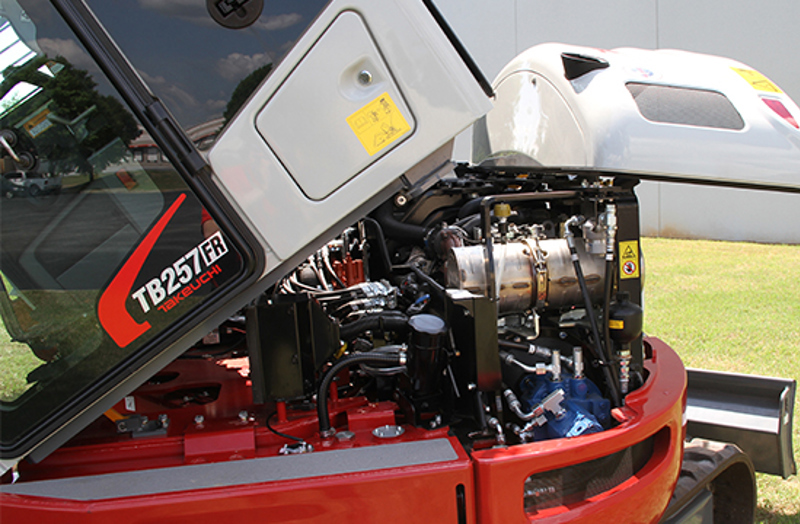
Daily pre-start checks
The daily check establishes the machine's baseline condition before it does any work. It takes 10 to 15 minutes. What it prevents, a mid-shift hydraulic failure, a cracked cylinder rod from an undetected seal leak, or a track walkout from incorrect tension, can cost a full day of production and a significant repair.
Standard daily checks:
● Engine oil. Level checked cold, before first start. Any unexplained consumption between checks warrants investigation before the session continues.
● Hydraulic fluid. Check level and inspect for colour change or cloudiness that may indicate contamination or emulsification.
● Coolant. Check the overflow reservoir level and look for any discolouration that may indicate combustion contamination.
● Track tension. Checked on flat ground. Both over-tensioning and under-tensioning accelerate undercarriage wear in different ways.
● Visual walk-around. Check under the machine for fluid, inspect hydraulic cylinder rods for scoring, and assess cutting edge and tooth condition at the same time.
● Cab check. Confirm all gauges, warning indicators, and control functions are normal before the first bucket lift.
Operators of Takeuchi excavators who complete this check as the first act of every shift catch faults when they are inexpensive to resolve.
50-hour service
The first scheduled service marks the end of the initial operating period and the start of the regular service cycle.
Key 50-hour tasks:
● Engine oil and filter change at the first interval, then per manufacturer schedule thereafter
● Full lubrication of all pin and bushing points: boom, arm, bucket linkages, and undercarriage pivot points
● Track tension check and adjustment
● Hydraulic line inspection for chafing, leaks, or fitting movement
● Bolt and fastener tightening across the machine
● Attachment mounting hardware inspection
The 50-hour service also provides the first structured opportunity to log any anomalies noticed during the break-in period.
250-hour service
The 250-hour service involves a more detailed inspection of the major systems and replacement of the first round of longer-interval consumables.
Key tasks:
● Hydraulic oil and filter inspection, with replacement where the manufacturer's specification requires it
● Fuel filter replacement
● Air filter service: clean or replace depending on the operating environment and dust loading. High-dust environments warrant more frequent attention.
● Engine coolant level and inhibitor concentration check
● Undercarriage wear measurement: record roller, idler, and sprocket readings against tolerance figures and track the trend across service intervals
● Full re-grease of all lubrication points
On Takeuchi excavators in high-intensity applications or abrasive ground conditions, some 250-hour tasks may need to be brought forward. Adjust to the environment, not just the calendar.
Major service: 500-hour, 1,000-hour, and annual intervals
The major service addresses components with longer replacement cycles that determine the machine's long-term reliability.
Typical major service scope:
● Engine oil analysis, to assess internal wear without disassembly
● Hydraulic system flush and refill
● Full undercarriage wear assessment with component replacement where measurements are outside manufacturer tolerance
● Timing belt inspection or replacement per manufacturer interval
● Cooling system flush and refill with fresh inhibitor
● Electrical connection inspection and contact cleaning
● Safety system function check: alarms, overload indicators, and emergency stop
The 500-hour service is also the practical trigger for a forward-looking condition review. Identifying components approaching their wear limit at this interval allows planned replacements during scheduled downtime rather than emergency repairs during productive hours.
Undercarriage maintenance
The undercarriage is the most significant wear system in a tracked excavator. It deserves its own attention outside the standard service intervals.
Components to monitor between services:
● Track links and pins. Measure pin diameter and track pitch against specification. Elongation in the track pitch indicates cumulative link and pin wear.
● Bottom rollers. These carry the full machine weight continuously. Tread wear is the primary indicator.
● Top rollers. Guide the return run of the track. Check for bearing wear and tread condition.
● Idlers. Front and rear. Measure tread width and check for bearing noise.
● Drive sprockets. Worn sprocket teeth accelerate track wear significantly if not addressed.
Clean the undercarriage regularly in wet or abrasive ground conditions. Mud and aggregate packed into the system accelerate every component's wear rate.
Record keeping
Complete service records are the single most important document associated with a working machine. They tell you what was done, when, by whom, and what was found. They underpin warranty claims, support resale valuation, and allow fleet managers to identify patterns across a machine's operating life.
For multi-machine fleets, a digital system tied to each machine's serial number and operating hours is standard. Records maintained at this level allow objective decisions about repair versus replacement as machines reach higher hours.
Why serviceability is designed into Takeuchi excavators
Takeuchi's engineering places serviceability alongside performance, durability, and operator comfort as one of four core design pillars. Service access points are grouped and within reach. Maintenance tasks take less time per service interval than on machines where access is an afterthought.
Toyota Takeuchi supports this with genuine Takeuchi parts dispatched from a national network, more than 500 technicians and 300+ mobile service vans through Toyota Material Handling Australia, and mobile service to site for fleets that cannot absorb the downtime of taking machines off the job for scheduled maintenance.